Walk through any large park in Chennai — Semmozhi Poonga, the Guindy National Park edges, or the tree-lined avenues of Alwarpet — and you will hear them before you see them: sharp, insistent calls from the canopy above, flashes of brilliant emerald green as small parrots shoot between the trees. Rose-ringed parakeets (Psittacula krameri) are arguably Chennai's most visible and spectacular wild birds, and the city harbours one of the largest urban populations in India.
Meet the Rose-Ringed Parakeet
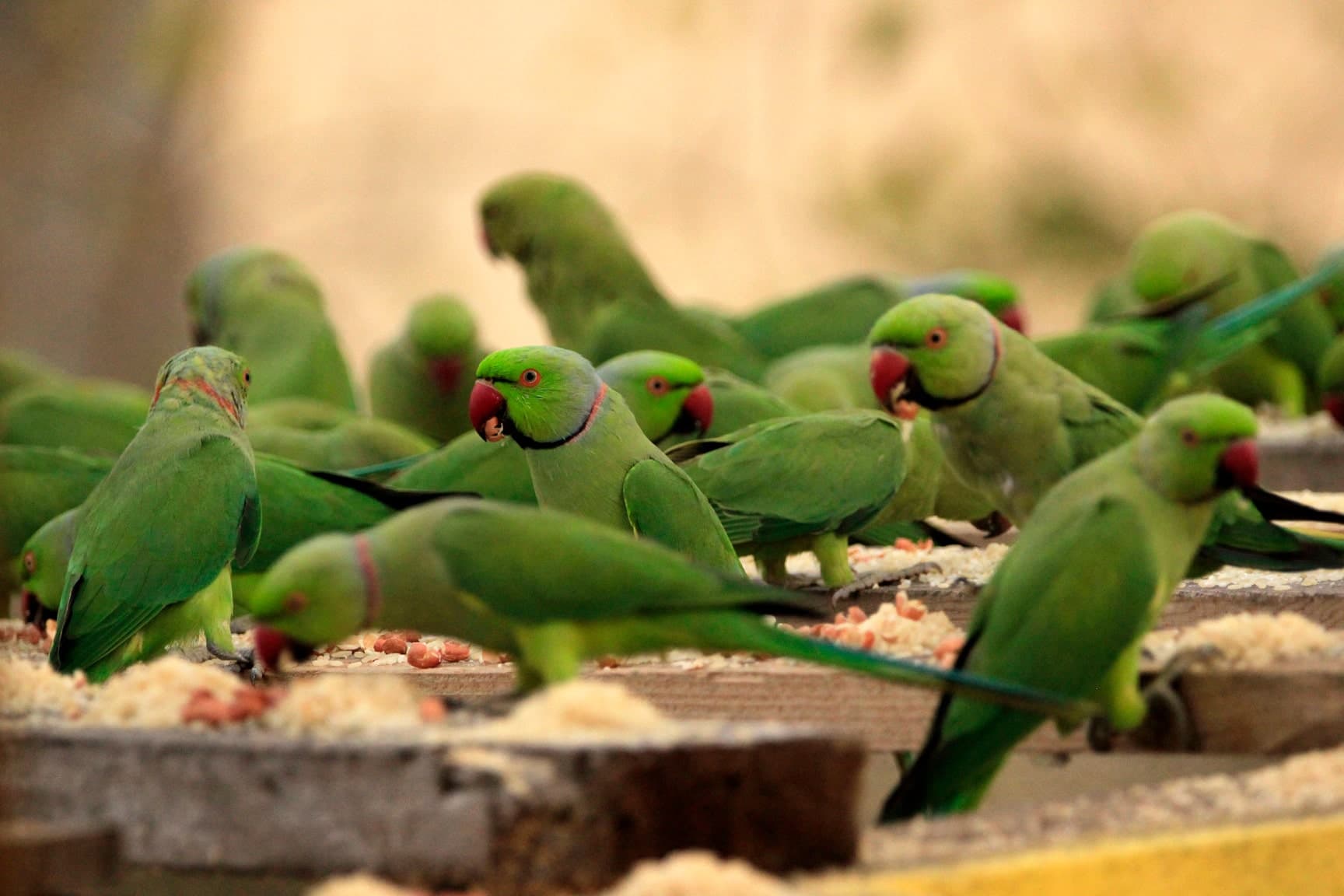
The rose-ringed parakeet — also known as the ring-necked parakeet or Indian ringneck — is a medium-sized parrot, roughly 40 centimetres from bill to tail tip, with brilliant lime-green plumage and a distinctive long, tapered tail. Males develop a narrow black-and-rose neck ring as they mature (usually by age 2–3), giving the species its name. Females and juveniles lack the ring.
Natively distributed across South Asia and sub-Saharan Africa, Psittacula krameri has proven remarkably adaptable to urban environments. Cities offer what wild birds need: food (fruiting trees, grain, insects), nesting cavities (old walls, building hollows), and relatively low predation compared to forest habitats. In Chennai, the combination of year-round fruiting trees, a tropical climate, and the near-absence of raptors in the urban core has enabled a thriving feral and wild population.
How Many Parakeets Live in Chennai?
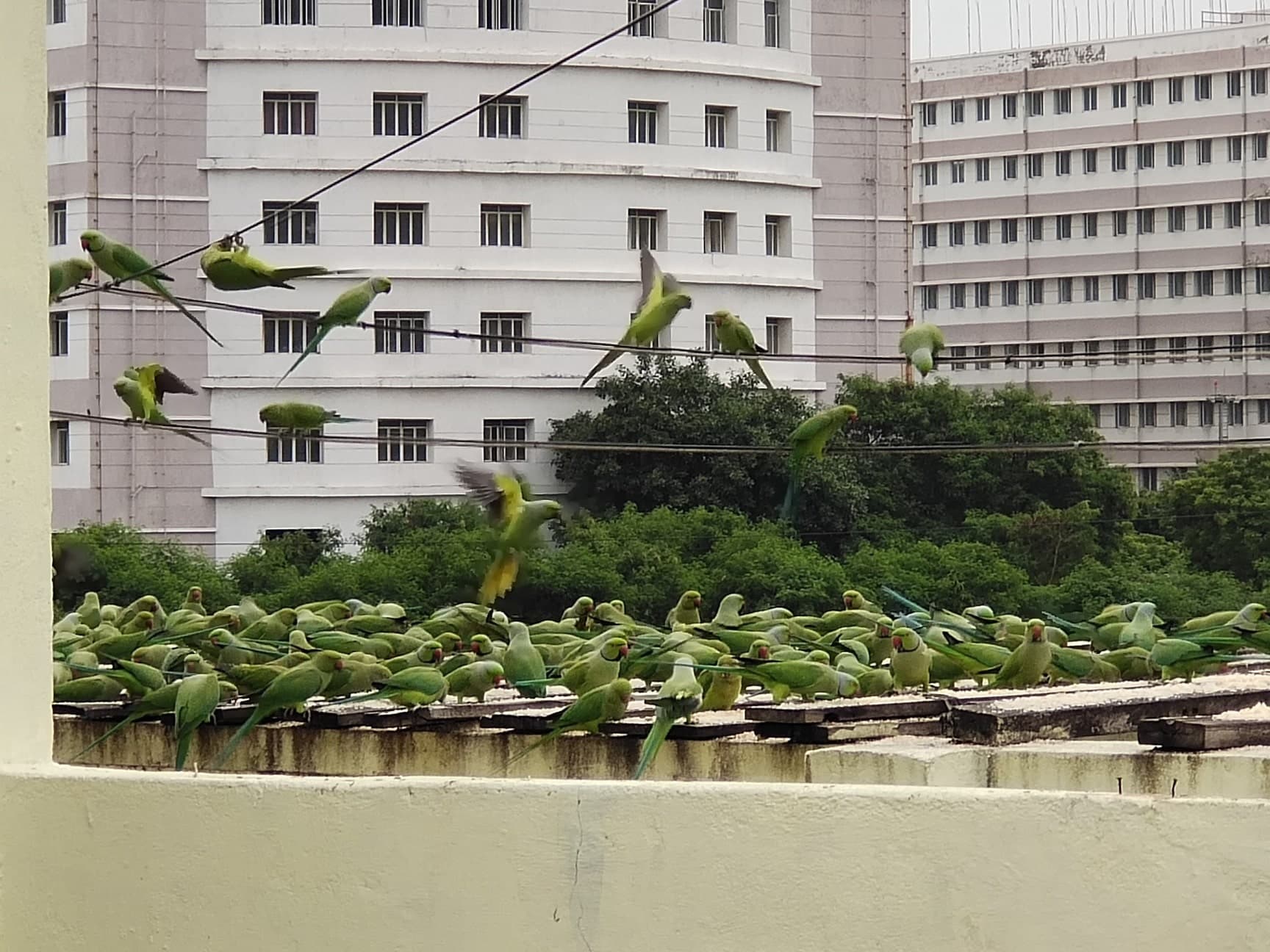
Precise census figures for urban bird populations are notoriously difficult to establish, but ornithologists and birdwatchers active in the Chennai region estimate the city's rose-ringed parakeet population at well over 30,000 individuals — possibly significantly more. They roost in large communal flocks in neighbourhood trees across the city, from the tamarind trees of Mylapore to the rain trees of Adyar.
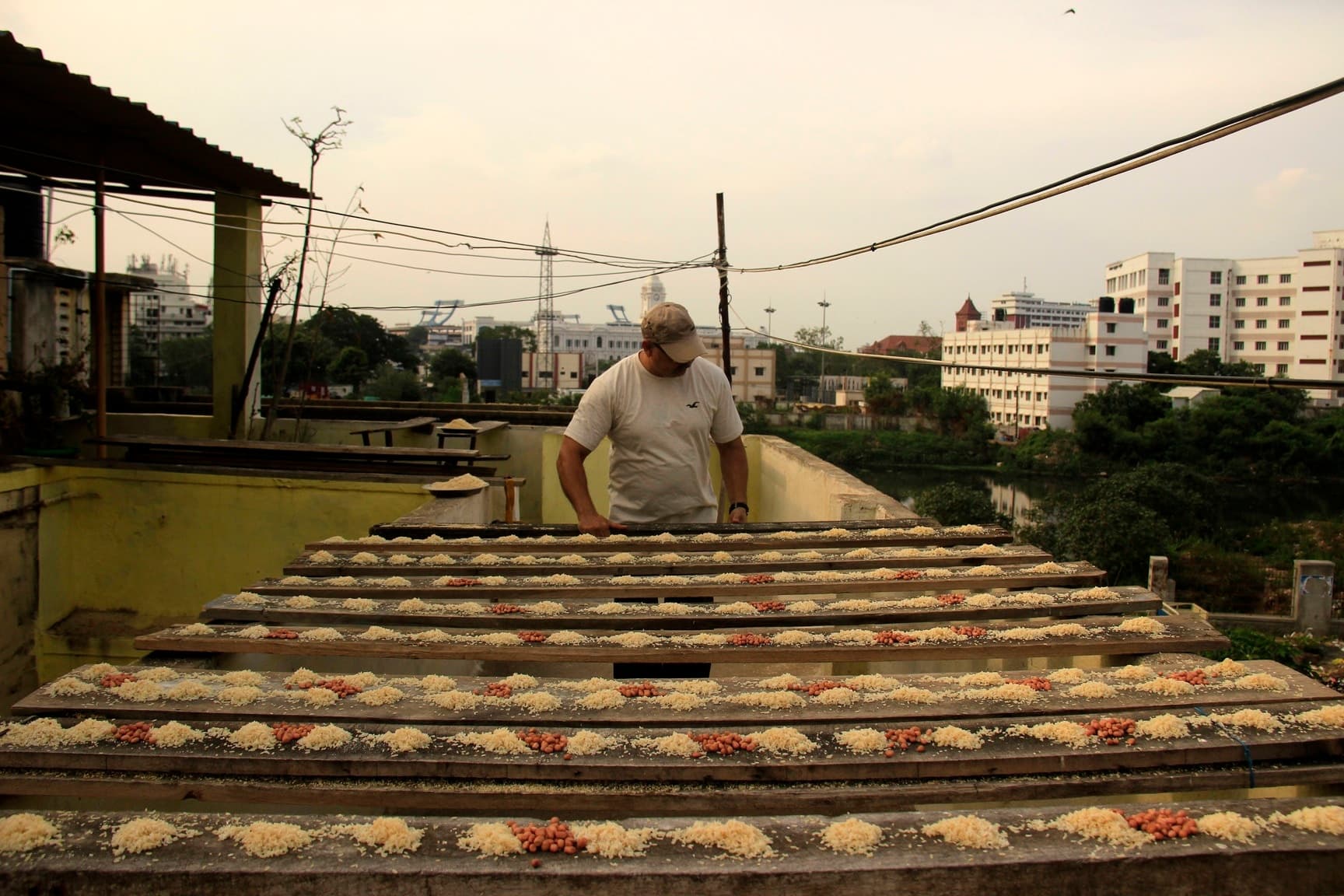
The most famous concentration is, of course, the evening gathering at the Birdman of Chennai sanctuary in Chintadripet. Sudarson Sah's rooftop draws approximately 6,000 birds daily — a single food source that has become a landmark event in the birds' daily circuit across central Chennai.
Intelligence and Behaviour
Parakeets are among the more intelligent birds in the Indian avifauna — a fact reflected in their behaviour at the Chintadripet sanctuary. They have learned to associate the sounds and rhythms of Sudarson's rooftop with reliable, safe feeding. Birds that are entirely wild demonstrate memory, social learning, and an apparent capacity to assess human intent.
Rose-ringed parakeets communicate vocally with considerable nuance. The sharp contact calls you hear from flocks in flight are different from the chattering of birds feeding together, which differs again from alarm calls. At Sudarson's rooftop, observant visitors can distinguish between the arrival calls — a kind of excited chatter — and the settled feeding sounds once the birds have landed.
They are also capable of mimicking human speech, which is why they have been kept as pets for centuries. The birds in Sudarson's sanctuary are never caged — their 'talking' relationship with him is built entirely on daily positive association over sixteen years.
Conservation Status and Urban Pressures
The rose-ringed parakeet is currently listed as 'Least Concern' on the IUCN Red List, reflecting its wide global distribution and adaptability. In India, it is protected under the Wildlife Protection Act, 1972 — it is illegal to trap, cage, sell, or harm them.
However, urban pressures do affect the population. Older trees with natural nesting cavities are disappearing as Chennai modernises. Pesticide use in urban gardens affects insect populations that young parakeets depend on. Window collisions, introduced pets, and electrical cables all pose hazards.
Sudarson Sah's sanctuary, while not a formal conservation effort, has a quiet conservation benefit: it provides a stable, reliable food source to a significant portion of central Chennai's wild parakeet population and has educated tens of thousands of visitors about these birds — turning urban residents into advocates for urban wildlife.
Best Places to See Parakeets in Chennai
Beyond the extraordinary spectacle at the Birdman of Chennai sanctuary, rose-ringed parakeets can be observed across the city:
Semmozhi Poonga (Nandanam): The botanical garden's tall trees host large roosting flocks, especially at dawn and dusk.
Guindy National Park: India's only national park within a state capital. Morning visits reveal parakeets feeding on fruit trees alongside spotted deer and mongoose.
Adyar River Estuary and Adyar Eco Park: Fruiting banyan and fig trees attract large parakeet gatherings.
Nungambakkam and Alwarpet: The old rain trees on Khader Nawaz Khan Road and Nungambakkam High Road host significant parakeet populations.
For the definitive parakeet experience in Chennai — by a significant margin — the Birdman of Chennai sanctuary in Chintadripet remains unmatched. Book a free evening visit to see 6,000 birds descend on one rooftop as the sun sets.